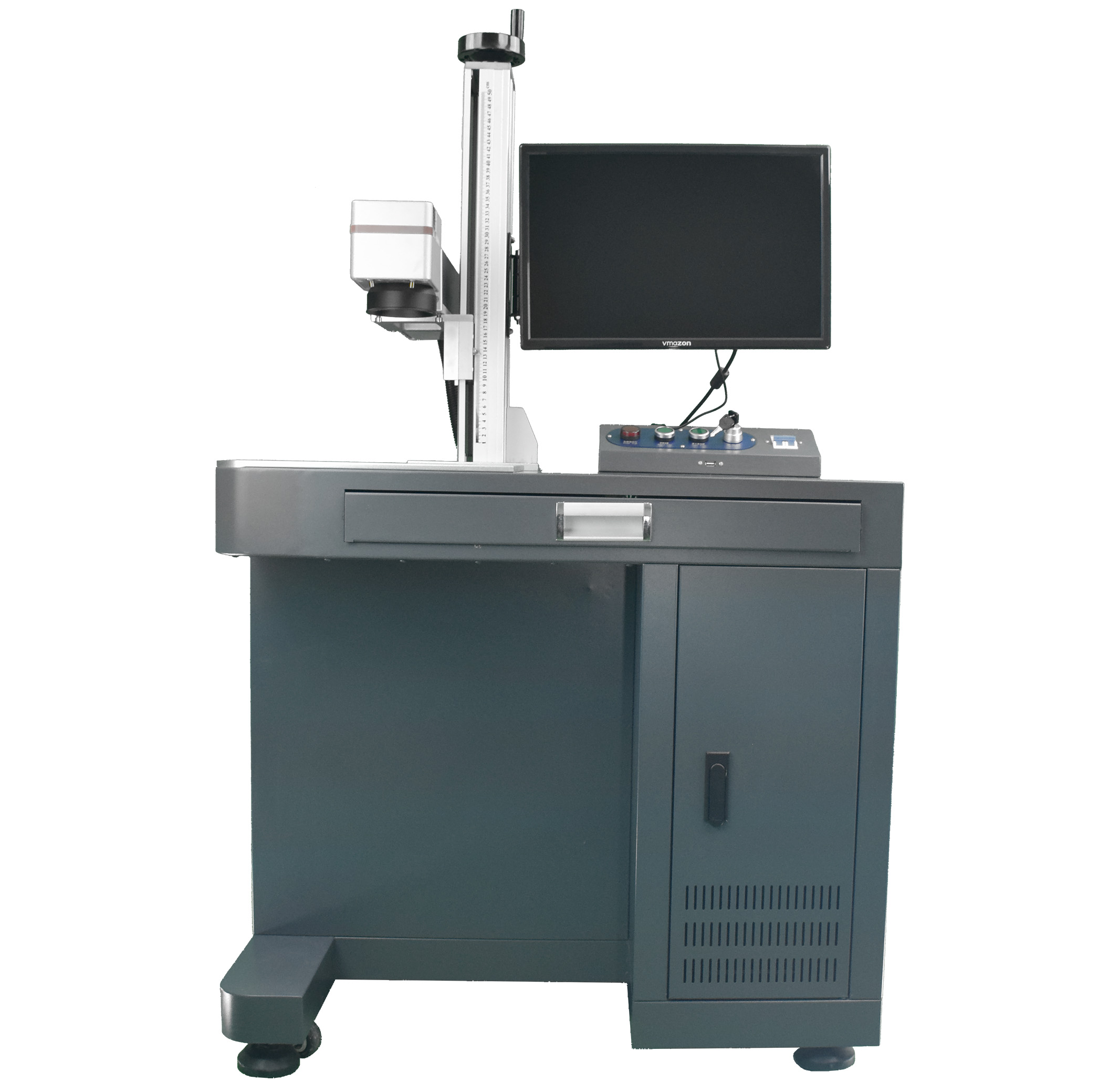
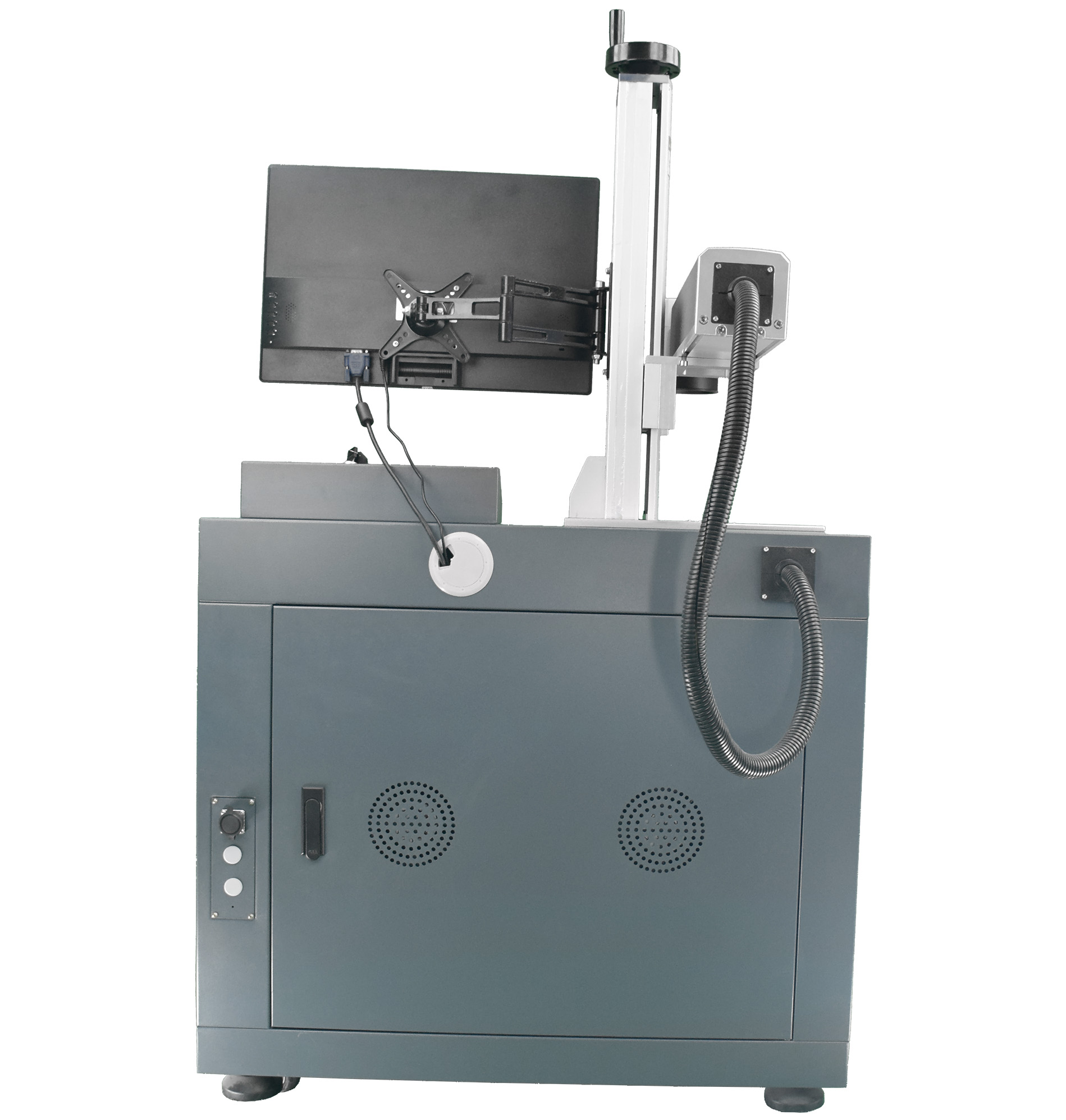
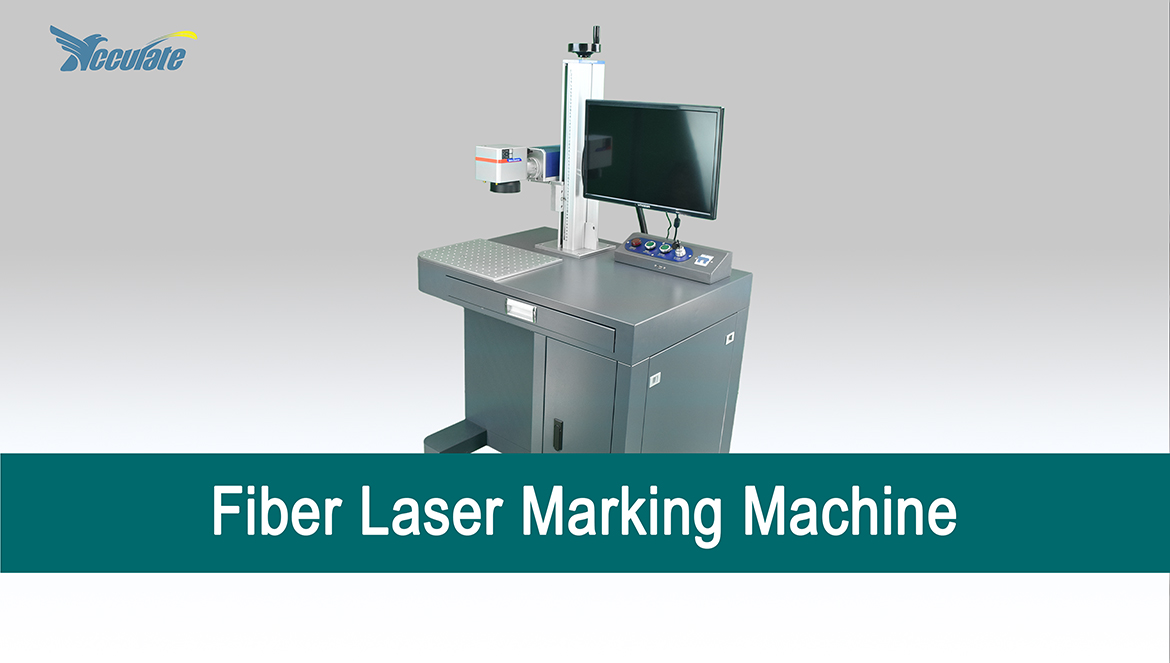
Fiber Laser Marking Machine
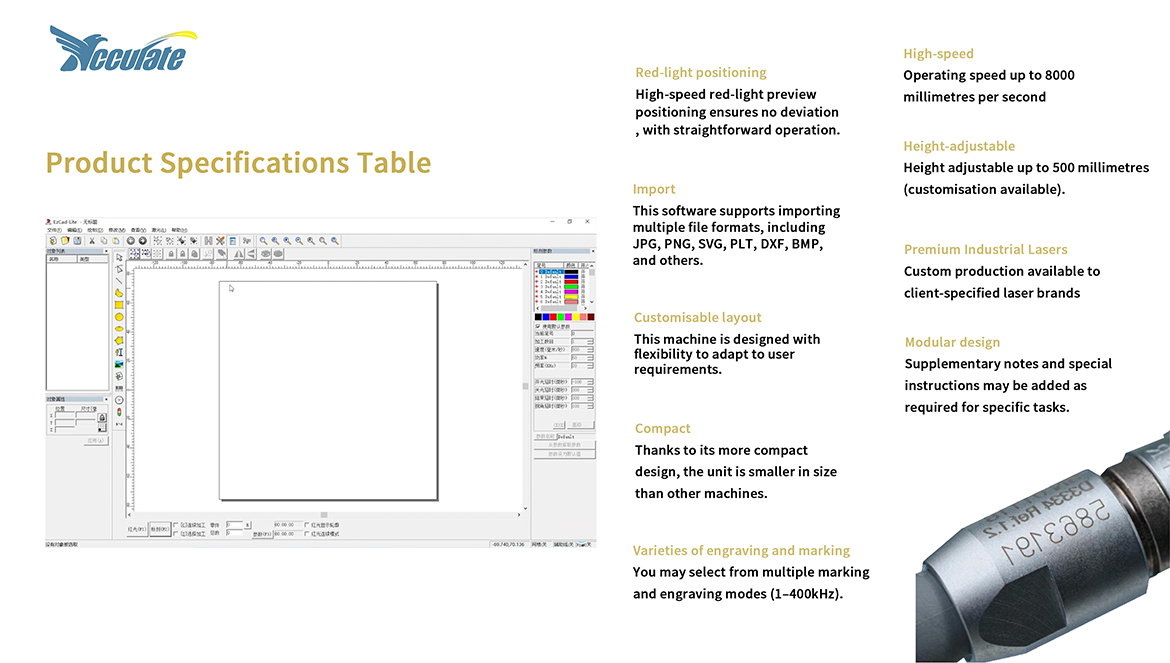
The core advantages of fiber laser marking machines lie in their high efficiency, low cost, and long service life. They utilize air-cooling for heat dissipation. In terms of performance, they produce an extremely small focused spot and can operate at speeds of up to 8,000 mm/s, enabling the creation of durable, precision markings. Additionally, they are compatible with a wide range of materials, including most metals, and their compact design makes them easy to integrate into automated production lines.
Fiber laser marking machines use a laser beam to print marks on the surfaces of various materials. The primary effects of laser marking machines are as follows:
1. The laser energy evaporates the surface layer of the target material, exposing the underlying layers;
2. The laser energy causes chemical or physical changes in the surface layer, thereby “engraving” the desired patterns and text;
3. The laser energy burns away part of the material, revealing the desired engraved patterns and text.
Equipment Advantages:
1. Compared to other large-scale laser systems, these devices typically require less floor space.
2. These systems offer exceptional profitability and efficiency; their durability and high performance make them indispensable tools across numerous industries.
Laser Features:
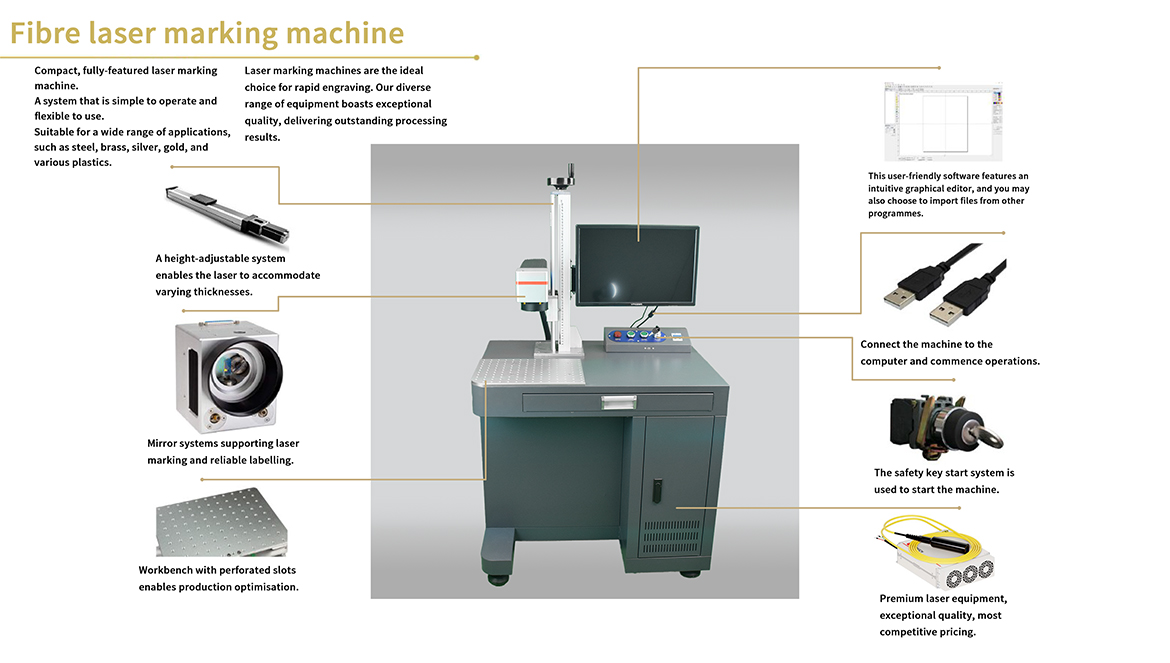
These systems utilize fiber lasers combined with “galvanometer” control technology and control systems, enabling them to mark a wide variety of metal and plastic materials at astonishing speeds.
Thanks to galvo technology, laser marking achieves exceptional speed performance.
Unlike CNC technology, the laser head does not need to be positioned at the marking point—it can quickly reach the desired location via two high-speed rotating mirrors positioned on either side of the material.
This technology allows the laser head to remain stationary rather than moving to the processing position.
A laser marking machine is a device that uses laser technology for engraving or marking. Depending on the material being processed, various types of lasers can be configured.
Fast Engraving:
1. Laser marking machines are tools that use lasers for marking and engraving, but in some cases, they can even cut certain materials (though not all)—the most efficient option. Such laser equipment is ideal for repetitive and rapid engraving and marking of various materials. On the other hand, they have a relatively small working area.
2. This means they are more portable and flexible; we can even move the cutting head to more complex locations for marking—locations that are completely inaccessible to CNC systems.
High Quality and Marking Speed:
1. Laser engraving operates at top speeds, significantly boosting production efficiency. Marking speeds can reach extremely high levels, with linear engraving speeds of up to 8,000 mm/s or even higher. Part marking can be completed in just a few seconds or even a thousandth of a second.
2. Laser marking equipment typically has much lower maintenance costs than laser engraving and cutting equipment that uses Computer Numerical Control (CNC) technology.
Applications and Industries:
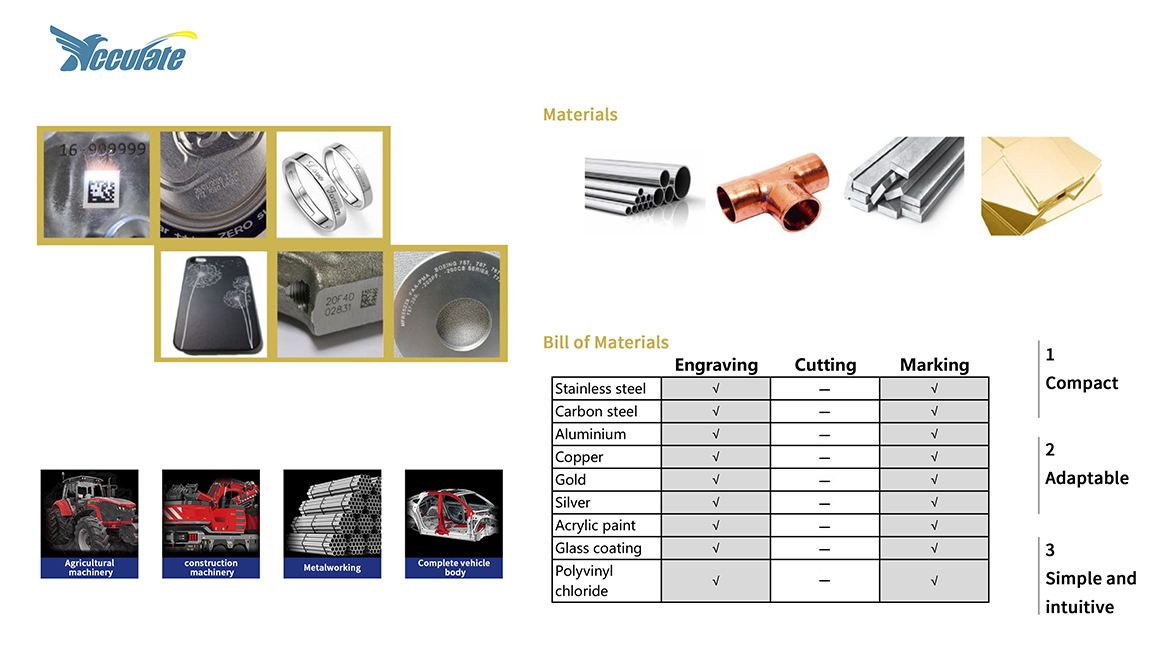
Laser marking equipment offers numerous advantages that meet the operational standards of the currency industry.
They enable the application of internal references, barcodes, and QR codes. Information such as expiration dates or production dates can be marked on products.
These machines are widely used in industries such as food processing, machining, and automotive manufacturing.
These machines allow for customization. Using laser marking technology, you can quickly achieve the desired results and significantly improve efficiency.
Attract customers’attention. You can use a variety of elements, including images, text, and vector graphics, as well as other types of files or designs.
Model: | LMF20-GS | LMF30-GS | LMF50-GS | LMF100-GS |
Output Power: | 20W | 30W | 50W | 100W |
Laser Type: | Fiber Optic | |||
Laser Wavelength: | 1064nm | |||
Cooling Method: | Air-Cooled | |||
Processing Area: | Range: 100×100mm, 300×300mm (customizable) | |||
Printing Content: | Text information, variable data, serial numbers, batch numbers, QR codes, logos, and graphic images | |||
Font Type: | Built-in selection of multiple standard fonts; custom fonts can be generated and re-edited | |||
Marking Speed: | ≤12000mm/s Actual marking speed varies by material | |||
Minimum Line Width: | 0.1mm (depending on material) | |||
Ambient Temperature: | Ambient temperature 0°C-40°C, relative humidity 10%-90% non-condensing | |||
Operating Voltage: | AC220V/50Hz | |||
Overall Dimensions: | 800×600×1400mm | |||
Overall Weight: | 55kg | |||
Packaging Dimensions: | 820×700×880mm | |||
Packaging Weight: | 75kg | |||