Marking and Cleaning 2-in-1
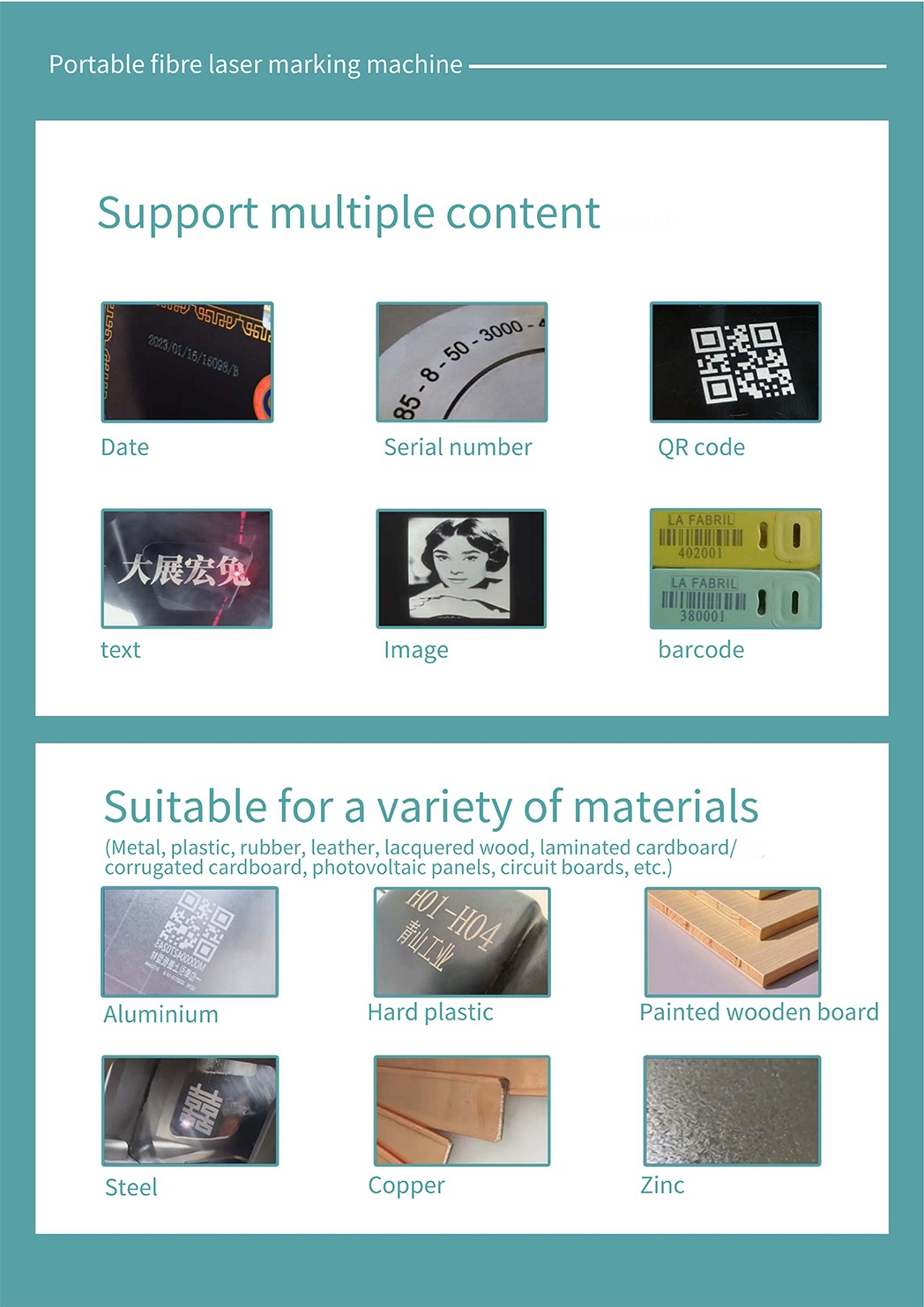
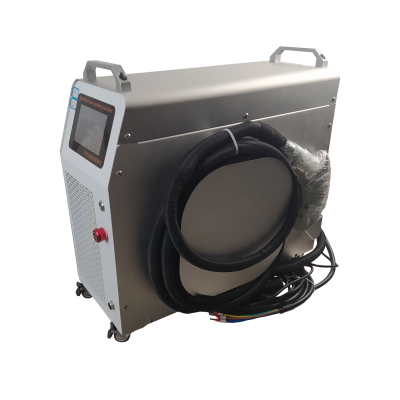
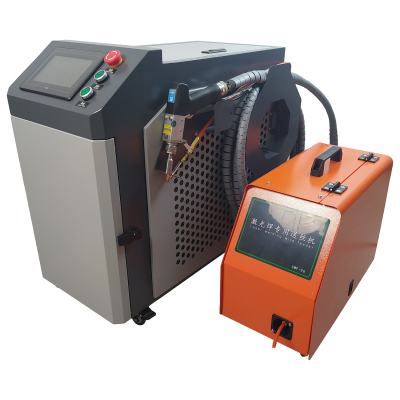
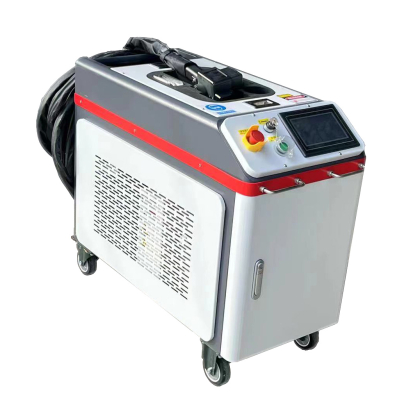
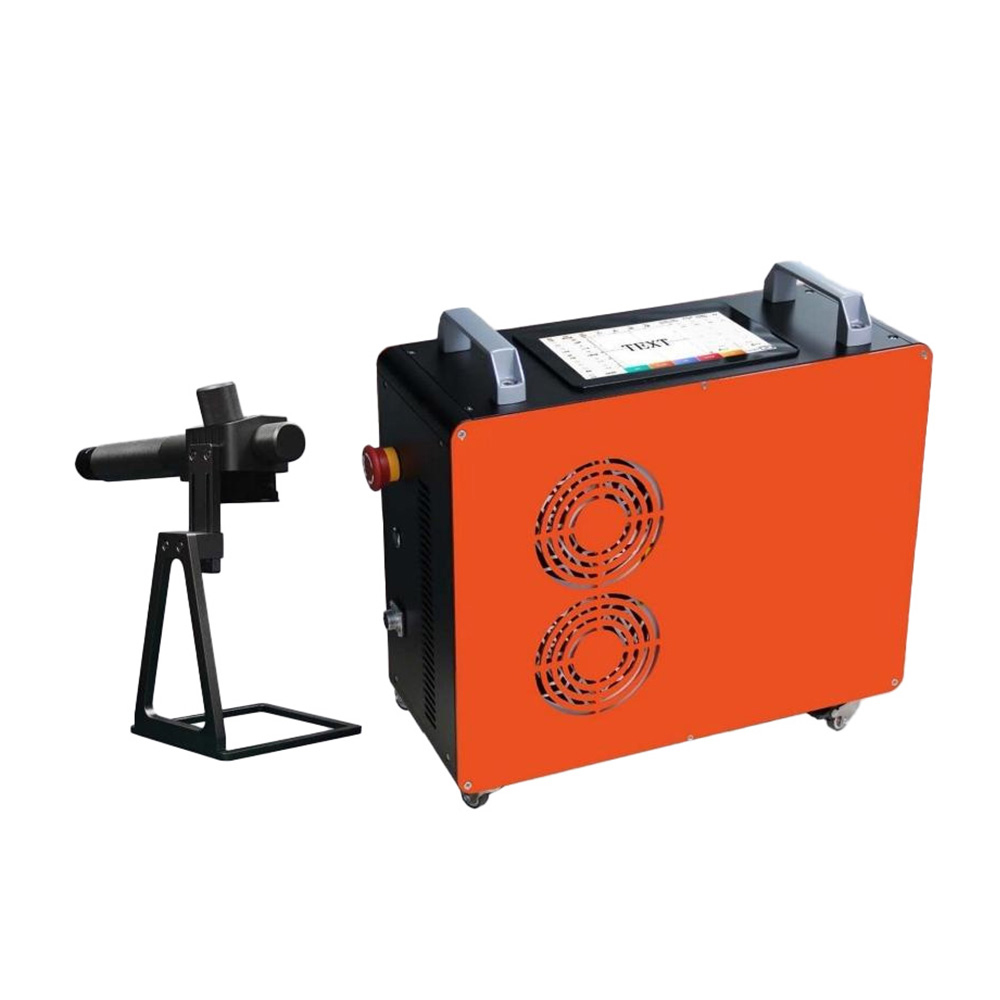
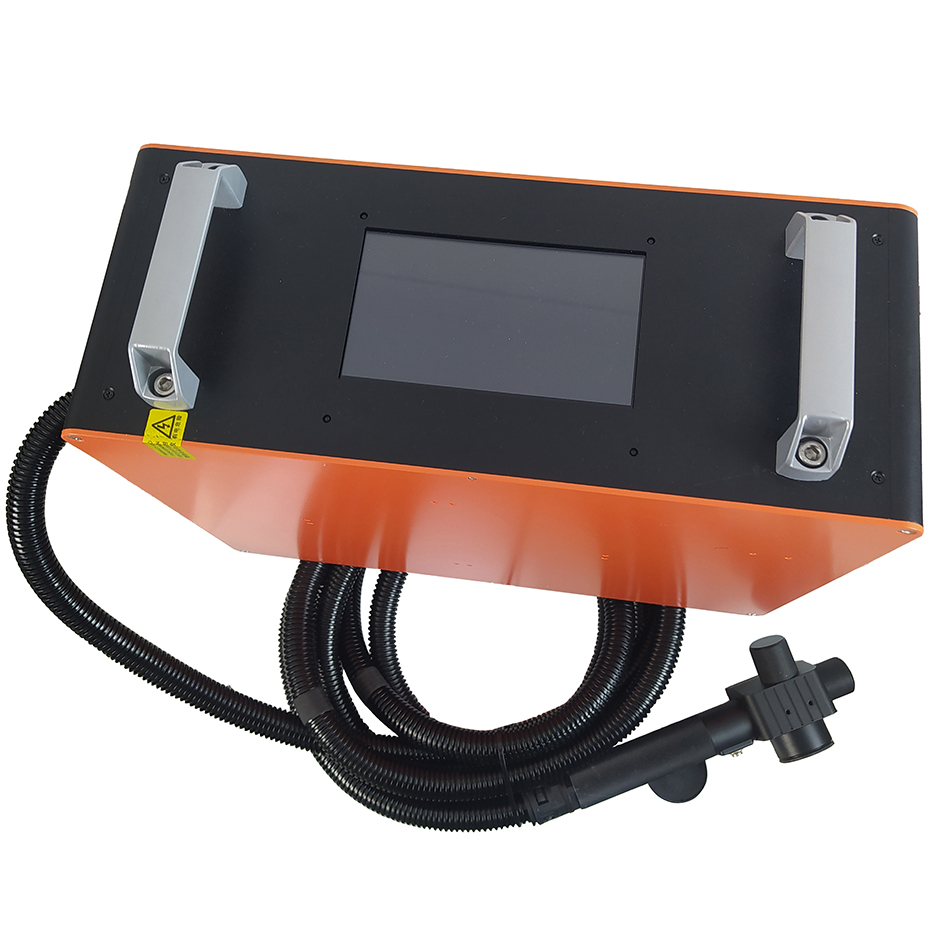
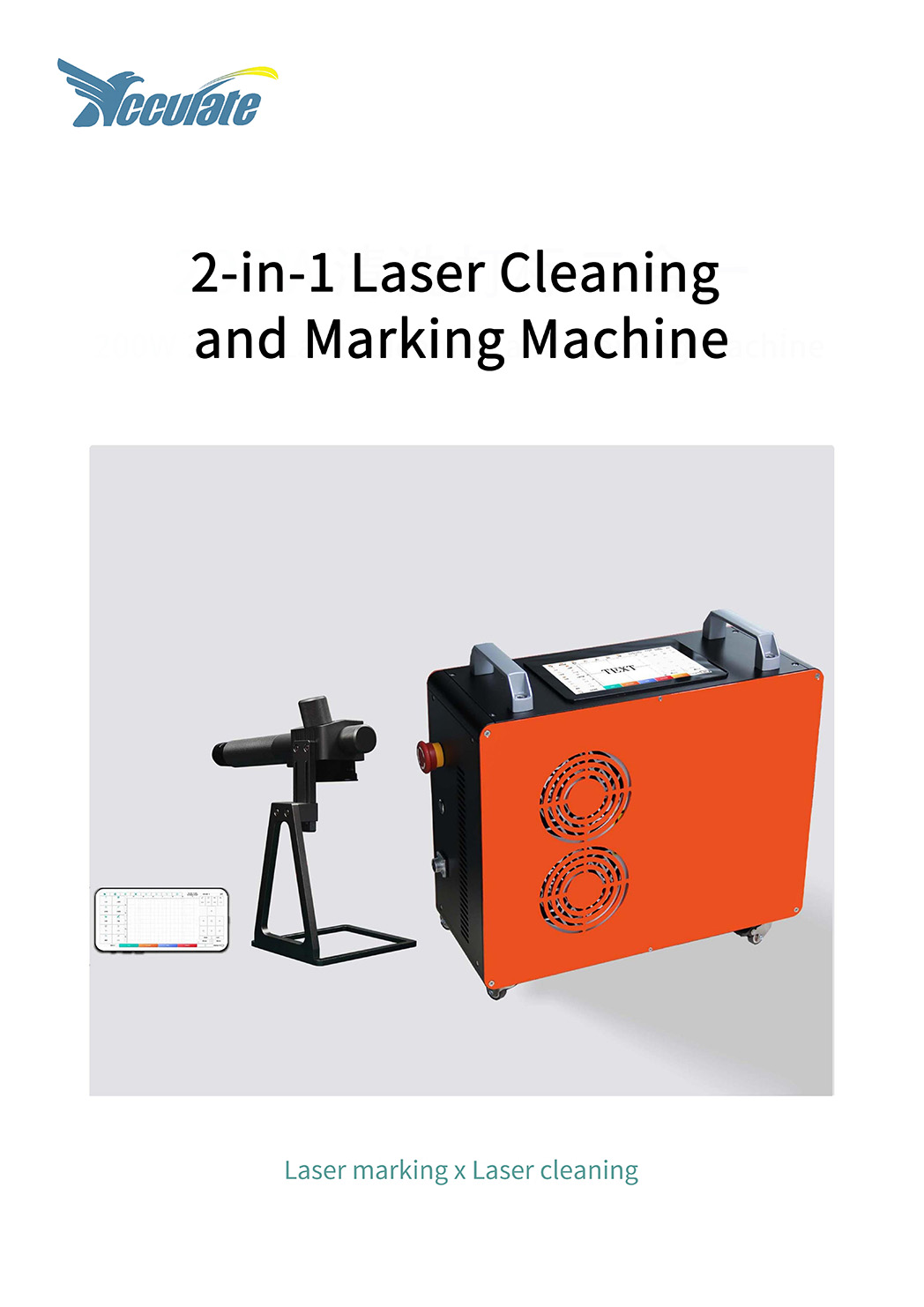
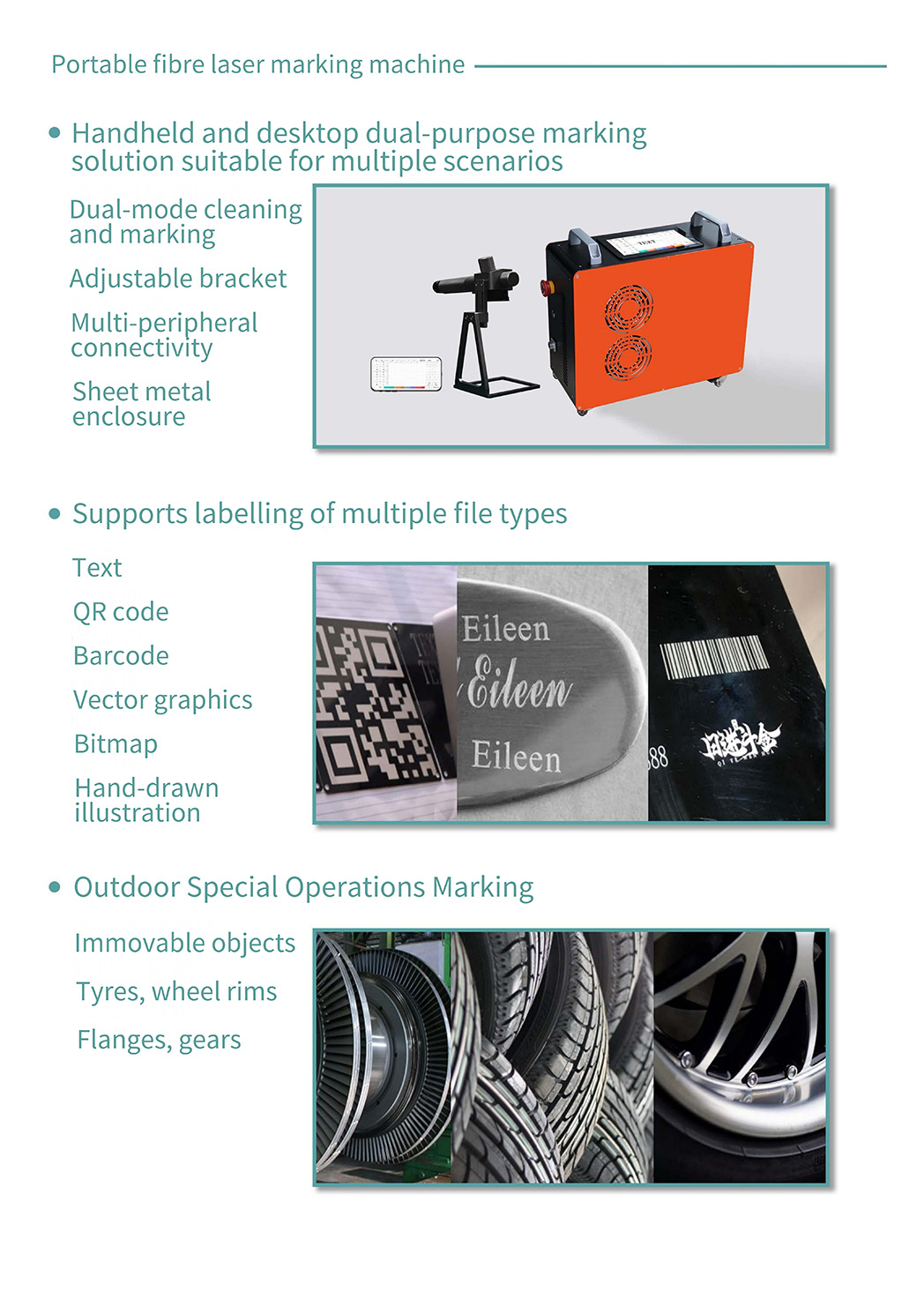
The multifunctional 2-in-1 cleaning and marking laser machine integrates these two functions into a single device. Users can switch between processing modes via the software to complete the cleaning process first. Laser cleaning uses a high-energy laser beam to irradiate the surface of the workpiece, causing contaminants—such as rust, paint, oil stains, and coatings—to vaporize or be removed instantly without damaging the base material. Laser marking uses a laser to leave marks on the surface of the workpiece, such as logos, serial numbers, QR codes, and dates.
200W 2-in-1 Cleaning and Marking System
Product Introduction
This multifunctional 2-in-1 cleaning and marking laser machine “integrates these two functions into a single device. Users can switch between processing modes via the software to first complete the cleaning process and then perform marking using the same machine.
Laser Cleaning: A high-energy laser beam is directed at the workpiece surface to instantly vaporize or remove contaminants—such as rust, paint, oil stains, and coatings—without damaging the base material. This can be viewed as a “subtractive” process.
Laser Marking: A laser is used to leave marks on the workpiece surface, such as logos, serial numbers, QR codes, dates, and more. This can be regarded as “surface finishing” or “photolithography.”
Key Advantages
Multifunctional machine that saves costs and space: Eliminates the need to purchase two separate machines, reducing procurement costs, floor space, and maintenance expenses.
Improved production efficiency: Integrating the cleaning and marking processes into a single workstation reduces the time required to transport and reposition workpieces between different machines, significantly increasing production throughput.
Easy to Operate: A unified software platform allows operators to master both processes by learning just one system.
High Flexibility: Particularly well-suited for processes requiring cleaning before marking, such as cleaning a specific area on rusted or coated metal to create a clean surface, and then marking that specific area.
First, remove old markings from reworked parts, then apply new markings.
Product Specifications | 200W | 300W |
Laser Type | Fibre laser generator | |
Laser Power | 200W | 300W |
Laser Wavelength | 1064nm | |
Maximum Pulse Energy | 1.5mJ | |
Laser Adjustment Range | 5-200kHz | 1-3000kHz |
Laser Lifespan | 100,000 hours | |
Marking Method | High-precision two-dimensional scanning method | |
Marking Speed | 10-7000mm/s | 10-20000mm/s |
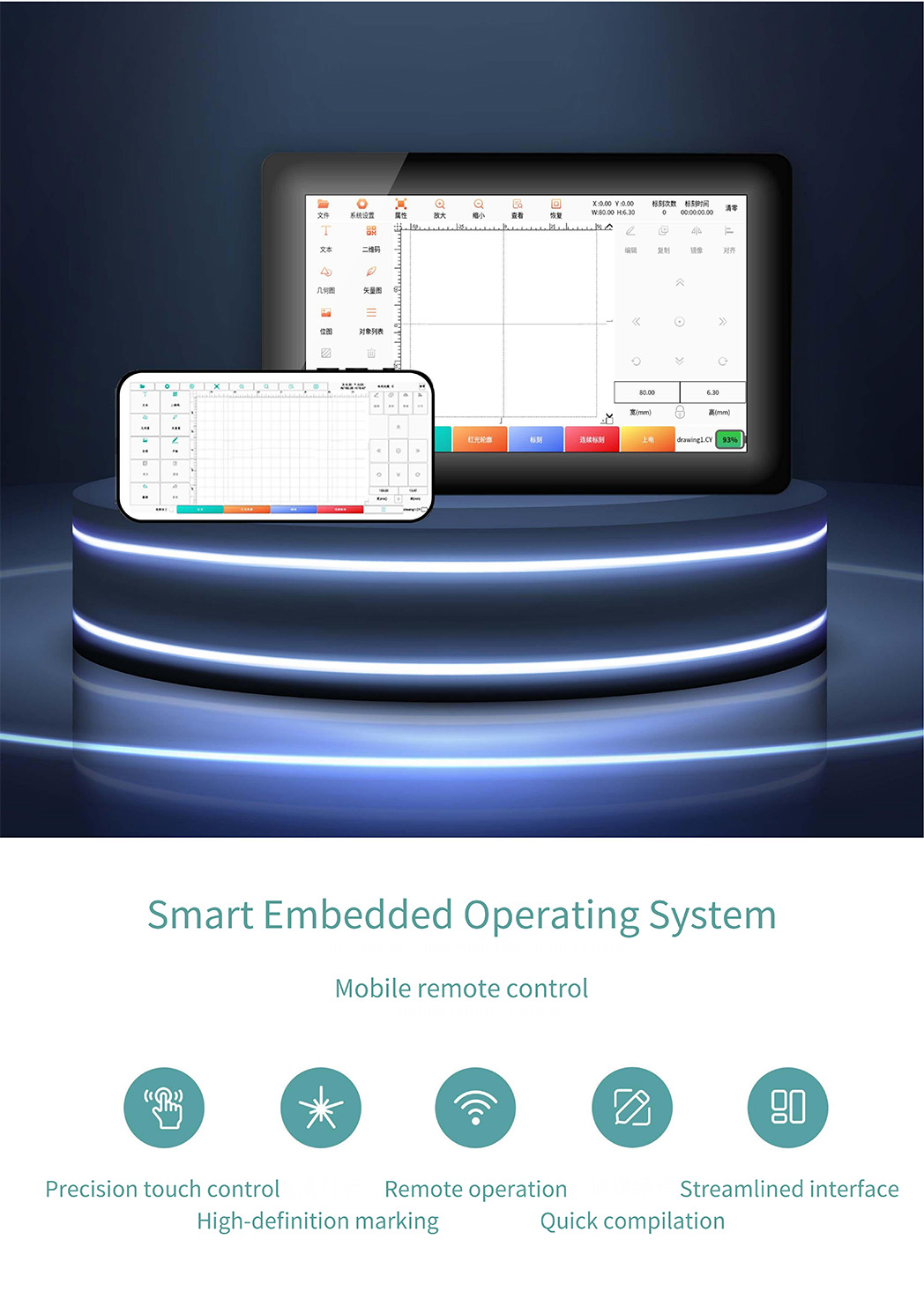
Operating Interface | 8-inch touchscreen | 7-inch touchscreen |
Marking Line Type | Matrix and vector display integrated | |
Marking Range | 100mm×100mm(Standard specification) | |
Positioning Method | Red Light Positioning | |
Interface Language & | Simplified Chinese, Traditional Chinese, English, Korean, Japanese, | |
Supported Marking Types | Text, QR codes, geometric shapes, vector graphics, bitmaps, etc., | |
Supported Import Formats | Bitmap formats: PNG, JPG, BMP; Vector formats: DXF, PLT, SVG; | |
Barcode/QR Code | One-dimensional barcodes: EAN, UPC, PDF417, and various CODE labels | |
Supported Marking Materials | Iron, aluminium, copper and other metals; stainless steel; PVC/PP/PB/ABS; rubber; | |
Cooling System | Built-in air cooling | |
Power Supply Voltage | 110-240AC | 220V |
Maximum Power Consumption | 1000W | <1200W |
Housing Material | Aluminium | |
Machine Net Weight | Net weight of entire unit <20kg | Net weight of entire unit 26.74 kg |
Operating Temperature Range | 0-40℃ | 0-35℃ |
Ambient Relative Humidity | 30-85%RH(non-condensing) | |
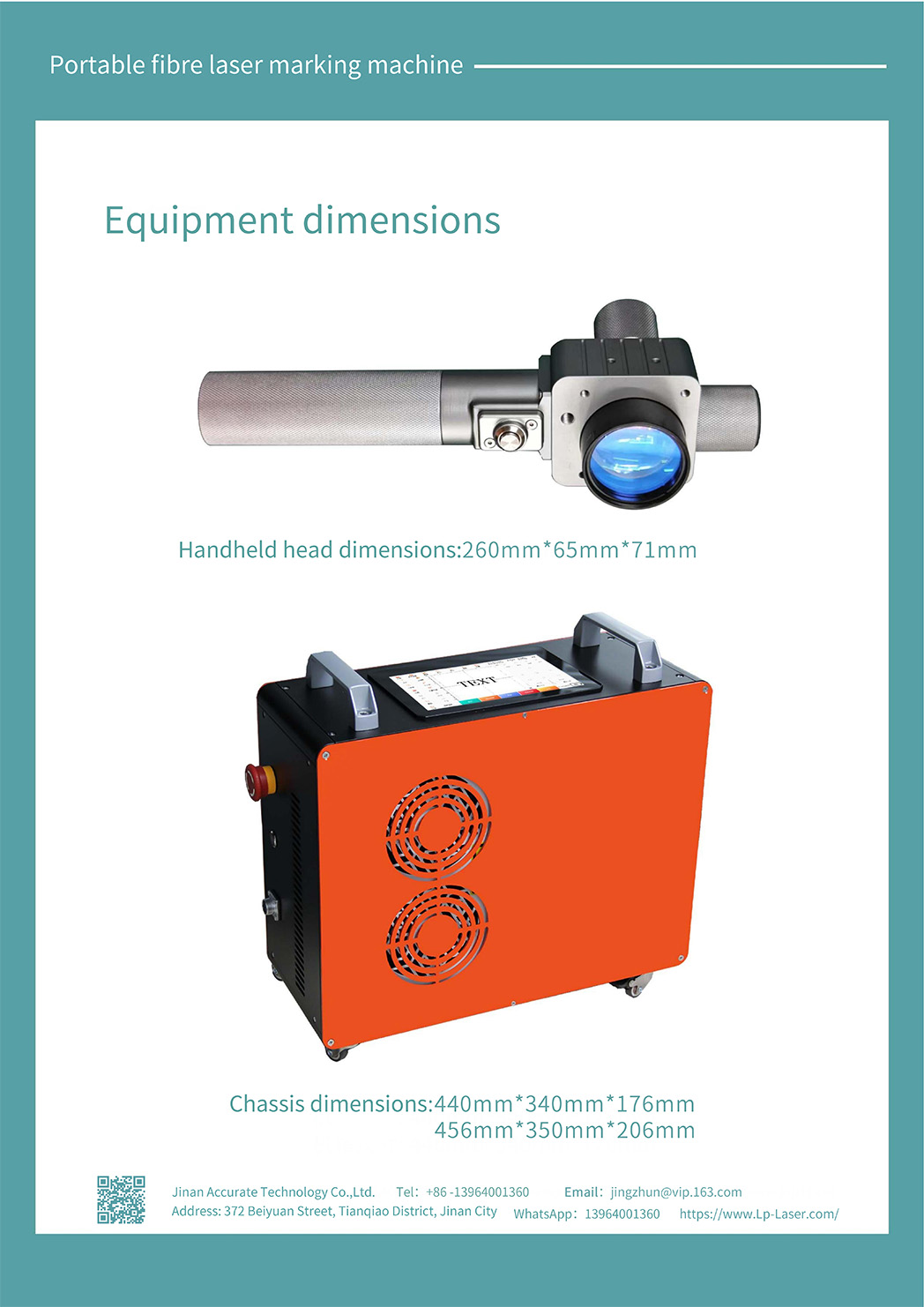
External Dimensions | 440*340*176mm | 456*350*206mm |
Handpiece Specifications | 260*65*71mm | 60*65*71mm |
roduct Applications
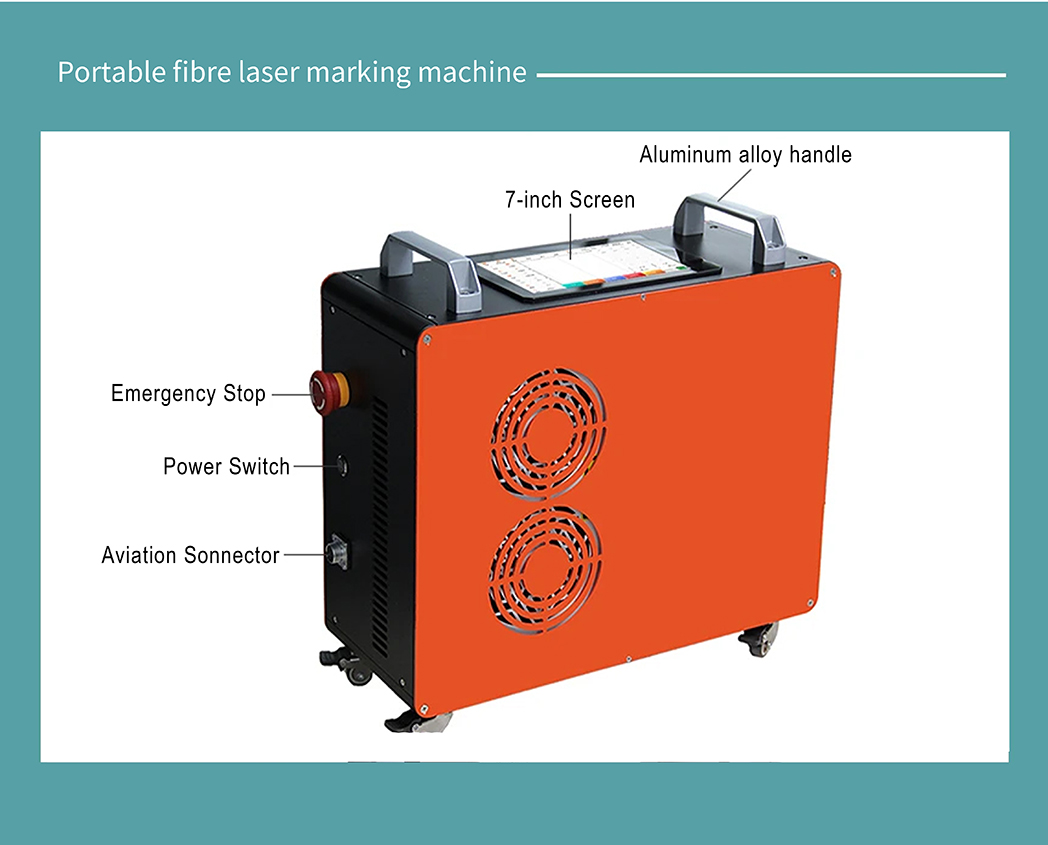
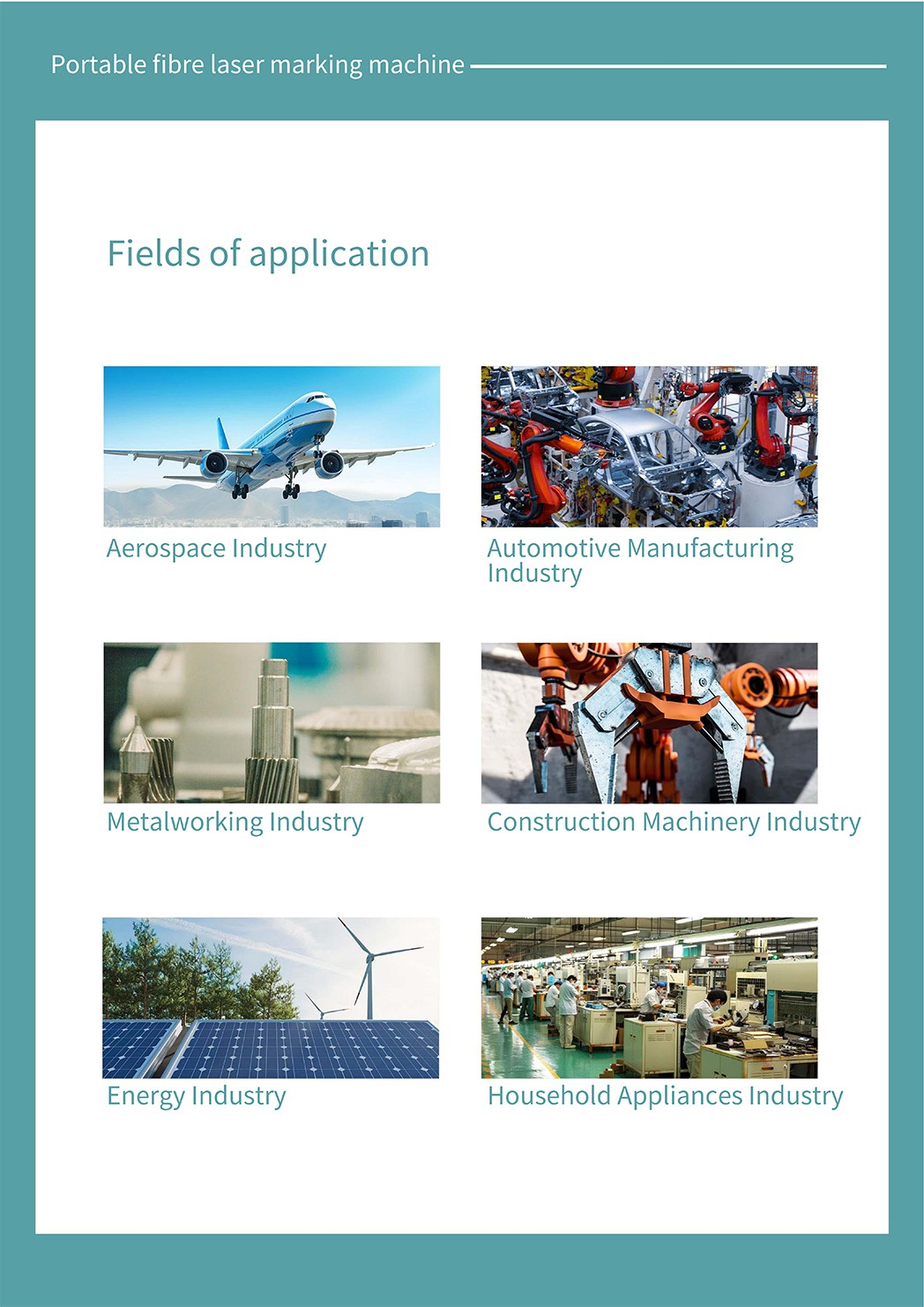
Automotive Parts: Cleaning dirt from engine components and brake rotors —> Marking with traceable QR codes and part numbers.
Aerospace: Removing coatings and oxide layers from aluminum and titanium alloy components —> Marking with high-precision, high-temperature-resistant permanent identifiers.
Electrical Engineering: Cleaning oxides from transformer terminals and busbars to improve conductivity —> Marking equipment information and safety labels.
Rubber Products: Cleaning tire molds —> Marking DOT codes and other tire information.
Heritage Restoration and Building Cleaning: Precisely cleaning stains from stone and metal surfaces (in these cases, typically only the cleaning function is used).